

Orbital Implants
Orbital implants are used to restore structure and volume within the eye socket following trauma, surgery or disease affecting the orbit.They play a critical role in both functional rehabilitation and cosmetic restoration.
Careful planning is essential, as even benign tumours can affect the optic nerve and eye position if they grow within this confined space.
What Are Orbital Implants?
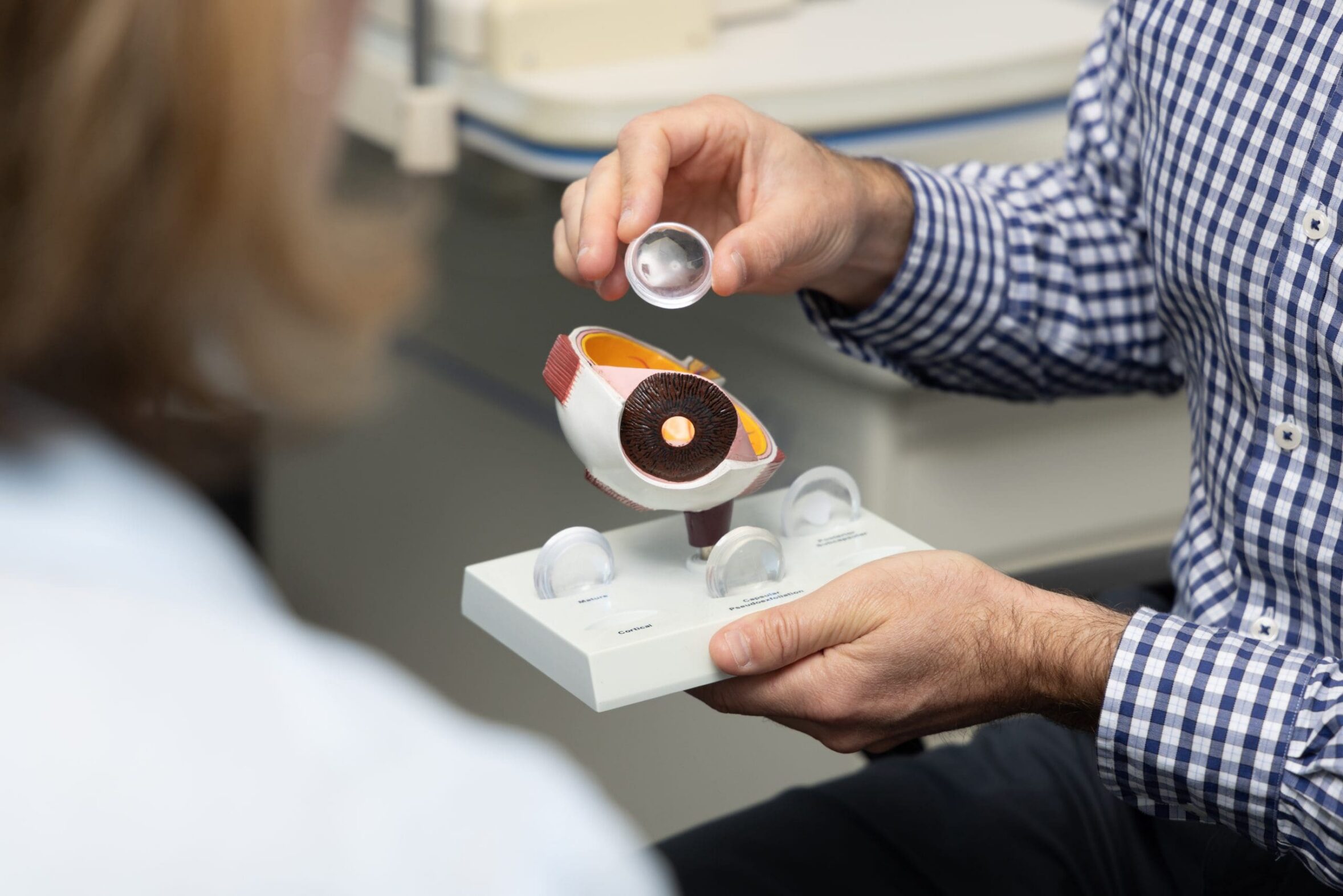
Orbital implants are biocompatible materials placed within the eye socket to restore lost volume or support damaged structures.
They are used to treat:
- Loss of orbital volume (sunken eye appearance)
- Orbital fractures (blow-out fractures)
- Trauma affecting the eye socket
- Post-enucleation (after removal of the eye)
By restoring the natural shape of the orbit, implants improve both eye position and facial symmetry.
Suitability
Orbital implants are recommended where structural changes to the orbit affect appearance, eye position or function.
This may include patients with trauma, previous surgery or conditions affecting the orbital tissues.
The Procedure
Surgery is performed under general anaesthetic.
Implants are carefully positioned within the orbit, often through incisions hidden inside the eyelid to avoid visible scarring.
Modern implants are frequently made from porous materials, allowing surrounding tissue to integrate with the implant for stability.
Recovery & Aftercare
- Most patients take approximately one week off work
- Physical activity is limited initially, with gradual return over two weeks
- Follow-up ensures proper healing and implant positioning
Outcomes
Orbital implants restore volume, improve eye position and enhance facial symmetry.
They also help relieve functional issues such as double vision where orbital structures have been affected.
While all orbital surgery carries some risk, careful planning and specialist expertise ensure strong and predictable outcomes.
A Considered Approach to Care
Each of these procedures is highly individualised, with treatment tailored to both functional needs and long-term outcomes.
The focus is not simply on correcting the condition, but on restoring comfort, confidence and natural balance.