

Astigmatism
Astigmatism is a common refractive condition caused by an irregular curvature of the cornea or, less commonly, the natural lens inside the eye. Astigmatism often occurs alongside short-sightedness (myopia) or long-sightedness (hyperopia).What Is Astigmatism?
Astigmatism affects the way light enters and focuses within the eye. Because the curvature is uneven, vision may appear:
- Blurred
- Stretched or distorted
- Shadowed around edges
Astigmatism can be present from childhood or develop gradually over time.
Types of Astigmatism
Regular Astigmatism
The cornea is not perfectly spherical but remains symmetrical. This is the most common type and is usually corrected effectively with glasses, contact lenses or modern surgical techniques.
Irregular Astigmatism
The cornea is asymmetrical, often steeper in one area. This form is sometimes associated with conditions such as keratoconus or corneal scarring and can be more complex to treat.
Symptoms
Common symptoms include:
- Blurry vision at near and distance
- Headaches
- Squinting
- Eye strain
- Fatigue during reading or screen use
Next Steps
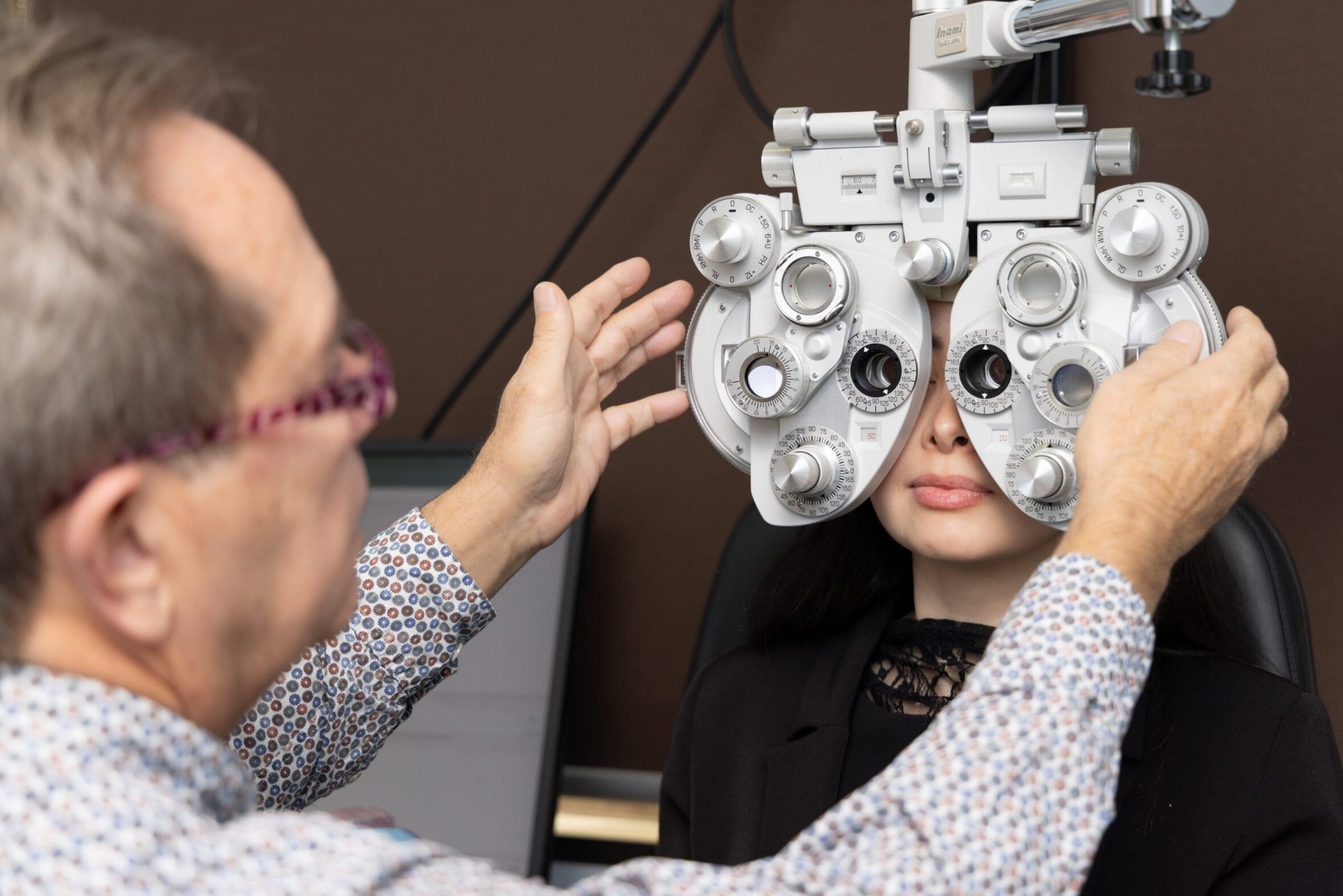
A comprehensive refractive assessment will determine the type and degree of astigmatism and whether it is stable.
For many patients, glasses or contact lenses provide adequate correction. For others – particularly those seeking greater convenience or visual freedom – surgical options may offer a long-term solution.
Assessment & Diagnosis
Assessment involves:
- Precise measurement of your prescription
- Detailed corneal mapping (topography)
- Corneal thickness evaluation
- Full ocular health examination
Advanced imaging allows us to differentiate between regular and irregular astigmatism and identify any associated corneal conditions.
Careful diagnosis ensures that any recommended treatment is both safe and appropriate.
Treatments
Astigmatism can be corrected with glasses, contact lenses, laser eye surgery or intraocular lens procedures.
Modern surgical techniques are highly successful in reducing – and often eliminating – the need for corrective eyewear. While most procedures provide permanent correction, the eye can continue to change naturally over time. Should this occur, further treatment options remain available.
Recovery & Aftercare
Recovery varies depending on the procedure performed.
For laser treatments most patients return to normal activities within a few days. Vision stabilises progressively and follow-up visits ensure optimal healing.
For lens-based procedures surgery is performed in a day setting. Eye drops are prescribed during the recovery period and visual improvement is typically rapid.
All surgical options involve structured follow-up to ensure safe healing and long-term stability.