


Enucleation (Eye Removal Surgery)
Enucleation is a highly specialised surgical procedure involving the removal of the eye, typically performed when the eye is no longer functional or when serious disease cannot be treated by other means.While it is a significant step, enucleation can provide relief from pain, remove disease and allow restoration of a natural appearance through modern reconstructive techniques.
What Is Enucleation?
Enucleation involves the removal of the eyeball while preserving the surrounding structures of the eye socket, including the muscles and eyelids.
Following removal, the lost volume is replaced with an orbital implant, which helps maintain the natural contour of the face and supports the fitting of a prosthetic eye.
This approach ensures both medical and aesthetic outcomes are carefully considered as part of treatment.
What Conditions Can It Treat?
Enucleation is typically considered when the eye cannot be preserved or when it poses a risk to overall health or quality of life.
It may be recommended for:
- Intraocular tumours that cannot be treated safely by other methods
- A blind, painful eye causing significant and ongoing discomfort
- Severe eye trauma where the eye cannot be salvaged
- End-stage eye disease with no visual potential
In many cases, the procedure is performed to relieve persistent pain or to remove potentially serious disease.

Suitability
Enucleation is considered when other treatment options are no longer effective or appropriate.
Patients are carefully assessed to ensure the procedure is necessary and that all alternatives have been explored. The decision is made with a strong focus on long-term comfort, safety and overall wellbeing.
The Procedure
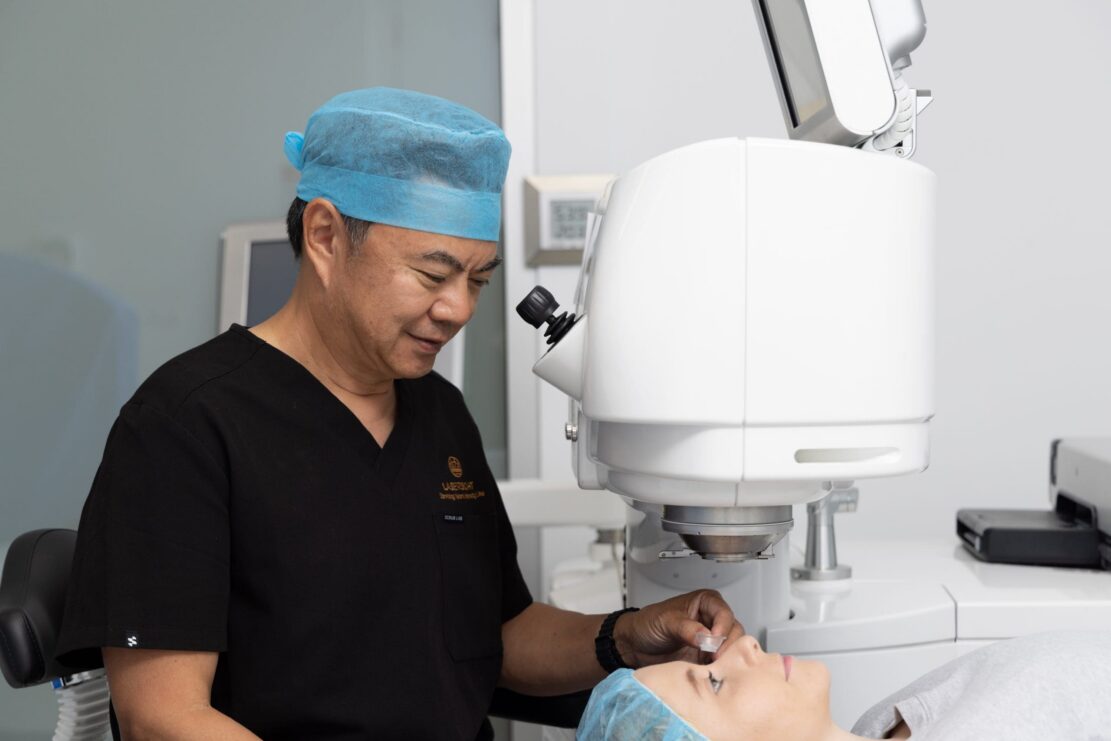
The procedure is usually performed under general anaesthetic, although local anaesthetic with sedation may be used in selected cases.
During surgery:
- The eye is carefully removed
- An orbital implant is placed to restore volume
- The eye muscles are attached to the implant to allow movement
- The eyelids and surrounding structures are preserved
Modern implants are designed to integrate with the body, allowing surrounding tissue to grow into them and reducing the risk of displacement.
The procedure typically takes around one to one and a half hours, with a short hospital stay often required for recovery.
Recovery & Aftercare
Following surgery:
- A protective dressing is worn for approximately one week
- A temporary clear shell (conformer) is placed to support healing and maintain eyelid shape
- Mild discomfort is expected and managed with appropriate medication
Over the following weeks, the socket heals and inflammation settles.
At approximately 6–8 weeks, patients are referred to an ocularist for fitting of a custom-made prosthetic eye.
Outcomes
Enucleation provides:
- Relief from chronic pain
- Removal of disease or tumour
- Restoration of facial symmetry through implant and prosthesis
The prosthetic eye is carefully designed to match the natural eye in appearance, with some movement achieved through attachment of the implant to the eye muscles.
While vision cannot be restored in the affected eye, the procedure allows patients to return to daily life with improved comfort and confidence.
A Considered Approach to Care
Enucleation is never undertaken lightly. It is a carefully considered decision made in situations where it offers the best outcome for the patient’s health, comfort and quality of life.
With modern surgical techniques and prosthetic design, both functional and aesthetic outcomes can be achieved to a very high standard.