



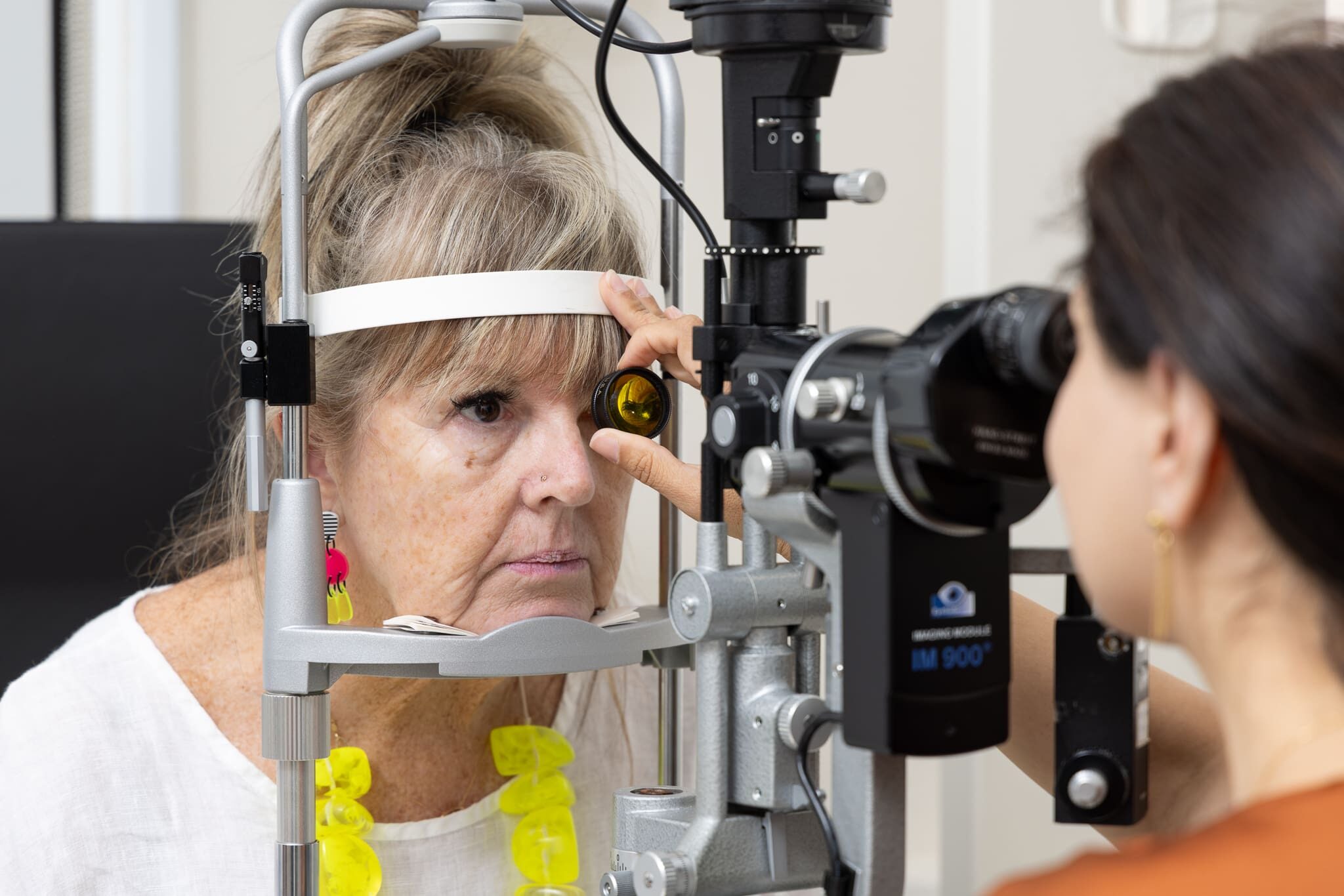
Corneal Crosslinking
Corneal cross-linking is a specialised procedure designed to strengthen the cornea and slow or halt the progression of keratoconus.By improving the structural stability of the cornea, it helps preserve vision and reduce the need for more invasive treatments in the future.
What Is Corneal Cross-Linking?
Corneal cross-linking is a minimally invasive treatment that uses a combination of riboflavin (vitamin B2) eye drops and controlled ultraviolet (UV) light to strengthen the corneal tissue.
It is most commonly used to treat:
- Keratoconus
- Corneal ectasia (post-surgical weakening of the cornea)
The treatment works by increasing the natural bonds within the cornea, making it more stable and resistant to further deformation.
Why Is It Recommended?
Conditions such as keratoconus cause the cornea to progressively thin and change shape, leading to distorted vision.
Cross-linking is recommended to:
- Slow or stop progression of the condition
- Preserve existing vision
- Reduce the likelihood of requiring a corneal transplant
While it does not reverse existing changes, it plays a critical role in stabilising the condition early.

A Personalised Approach
Not all patients require immediate treatment.
Careful monitoring is essential to determine whether the condition is progressing and when intervention is most beneficial.
Your specialist will assess:
- Changes in corneal shape over time
- Visual stability
- Overall eye health
Treatment is recommended when there is clear evidence of progression.

The Procedure
Corneal cross-linking is typically performed as a day procedure under local anaesthetic.
There are two main approaches:
- Epithelium-off (epi-off): the outer layer of the cornea is gently removed to allow deeper penetration of the treatment, offering a more established and effective approach
- Epithelium-on (epi-on): the outer layer is left intact, providing a more comfortable experience with a shorter recovery, though not always suitable for all cases
During the procedure:
- Riboflavin drops are applied to the cornea
- UV light is used to activate the solution and strengthen the corneal fibres
Recovery & Aftercare
Recovery varies depending on the technique used.
Following treatment:
- Mild discomfort or light sensitivity is common in the early days
- Vision may be temporarily blurred
- A protective contact lens may be placed to support healing (epi-off)
Most patients return to normal activities within a few days to a week, with vision continuing to stabilise over time.
Outcomes
Corneal cross-linking is highly effective at stabilising keratoconus and related conditions.
Most patients experience:
- Slowing or halting of disease progression
- Preservation of existing vision
- Reduced risk of requiring more advanced surgical intervention
Early treatment is key to achieving the best long-term outcomes.
A Preventative Approach to Corneal Health
Corneal cross-linking is a proactive treatment — designed to preserve rather than restore.
With timely intervention and specialist care, it offers a reliable way to protect your vision and maintain long-term eye health.