


Thyroid Eye Disease
Thyroid Eye Disease is an inflammatory condition affecting the tissues around the eye, often associated with thyroid hormone imbalance. With careful monitoring and specialised treatment, symptoms and changes in eye appearance can be effectively managed.What Is Thyroid Eye Disease?
The thyroid gland, located in the neck, produces hormones that regulate the body’s metabolism. When thyroid hormone levels become abnormal – either too high (hyperthyroidism) or too low (hypothyroidism) – an inflammatory response can occur within the tissues of the orbit.
This inflammation may cause swelling of the muscles and fatty tissue that surround the eye. As these tissues enlarge, they can push the eye forward and affect normal eye movement.
Thyroid Eye Disease typically develops in two phases:
Active (Inflammatory) Phase
During this stage, inflammation and swelling occur within the orbit. This phase may last from six months to three years, during which symptoms can fluctuate.
Inactive (Burnt-Out) Phase
Once inflammation settles, the condition stabilises. However, some patients may be left with residual changes such as eyelid retraction, eye prominence or double vision caused by scar tissue.
Surgical treatment is usually considered only once the disease has entered this inactive phase, unless vision is threatened.

Symptoms
Symptoms vary depending on the severity of inflammation and may include:
- A staring or prominent eye appearance
- Dry, irritated or watery eyes
- Swelling of the eyelids or tissues around the eye
- Redness and discomfort
- Double vision
- Difficulty closing the eyelids completely
- Sensitivity to light
In more severe cases, swelling of the eye muscles can restrict eye movement or compress the optic nerve. Rarely, this may lead to vision loss if not treated promptly.
Next Steps
If Thyroid Eye Disease is suspected, ongoing specialist monitoring is important. Because the condition evolves over time, multiple consultations may be required to determine whether the disease is still active or has stabilised. This allows treatment to be carefully timed to achieve the best functional and cosmetic outcomes.
Assessment & Diagnosis
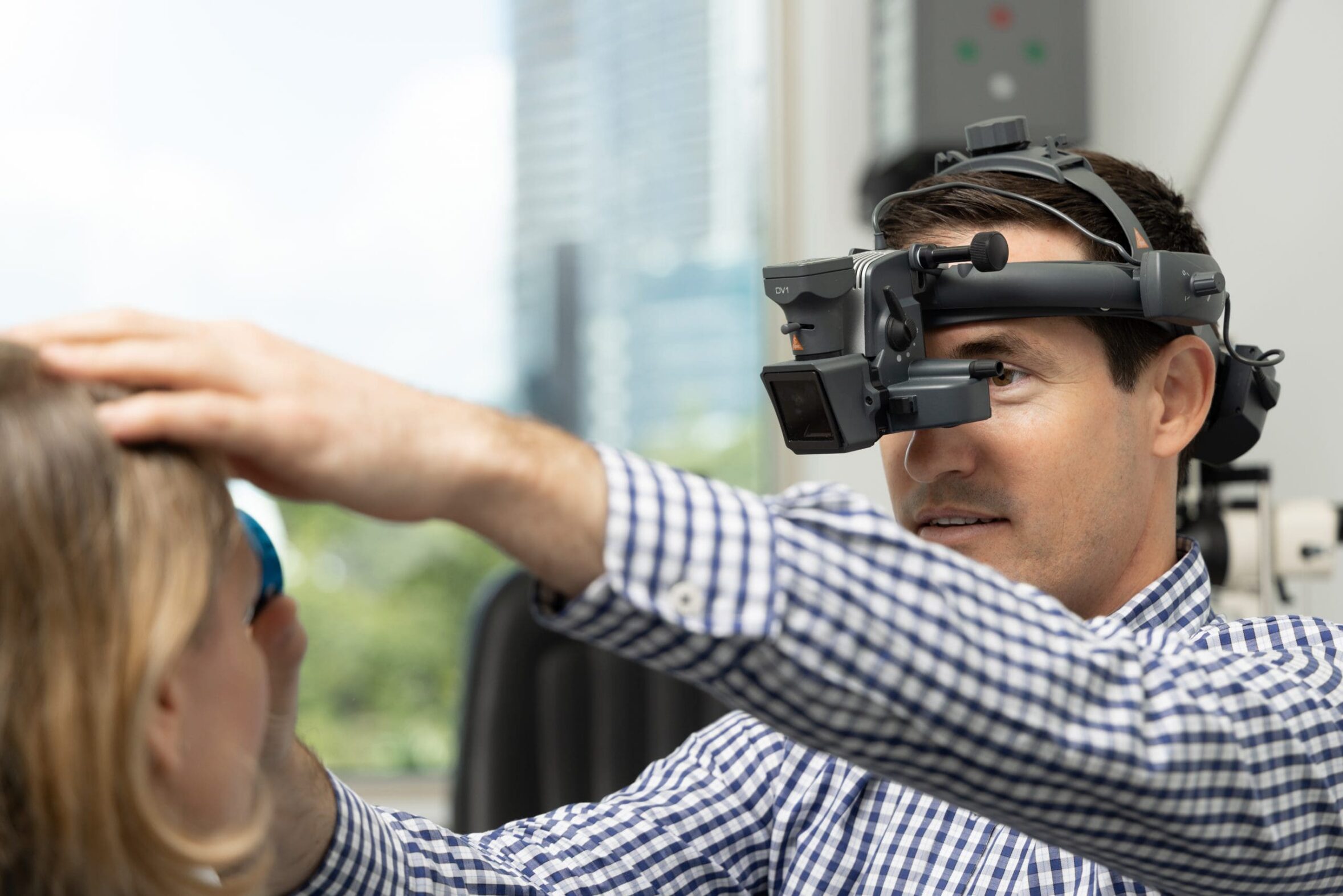
Diagnosis is based on clinical examination and imaging studies to assess the structures within the orbit.
Evaluation may include:
- Detailed eye examination
- Assessment of eye movement and eyelid position
- Measurement of eye prominence
- Imaging with CT or MRI scans
- Review of thyroid function and medical history
These investigations help determine the stage and severity of the condition.
Treatments
Treatment depends on whether the disease is in the active or inactive phase and on the severity of symptoms.
Orbital Decompression
Orbital decompression surgery creates additional space within the eye socket by carefully removing portions of bone or sinus wall. This relieves pressure within the orbit and allows the eye to move back into a more natural position.
Eyelid Surgery (Blepharoplasty)
Blepharoplasty may be performed to address eyelid changes caused by the condition, helping to restore eyelid function and improve appearance.
Eyelid Repositioning
Eyelid repositioning procedures can correct eyelid retraction, improve eyelid closure and reduce irritation of the eye surface.
Treatment is often planned in stages to achieve the best visual and functional outcomes.
Recovery & Aftercare
Recovery depends on the type of treatment performed. Surgical procedures are carefully planned and followed by regular monitoring to ensure proper healing and stability of vision.
Because Thyroid Eye Disease can evolve over time, ongoing follow-up allows treatment to be adjusted as needed.
With appropriate care and monitoring, permanent vision loss from this condition is uncommon.