

Skin Cancer
Skin cancers commonly occur around the eyes due to sun exposure and require specialised treatment to remove the cancer while preserving eyelid function. Early diagnosis and expert reconstruction are key to achieving the best outcomes.Skin cancer is extremely common in Australia, with up to 50% of Australians developing it at some point in their lives. A large proportion of these occur on the head, face and neck – particularly in areas exposed to long-term sun exposure.
The delicate region around the eyes, including the eyelids, requires specialised care. Treatment in this area focuses not only on complete cancer removal, but also on preserving eyelid function, eye protection and natural appearance.
What Is Skin Cancer?
Skin cancer occurs when abnormal cells grow uncontrollably within the skin, often as a result of cumulative sun (UV) exposure.
In the periocular region (around the eyes), careful management is essential due to the complexity of the eyelids. The eyelids are made up of multiple layers, each playing an important role in protecting the eye, maintaining moisture and supporting clear vision.
The most common types of skin cancer affecting this area include:
- Basal Cell Carcinoma (BCC)
The most common type. While it does not spread to other parts of the body, it can grow locally and damage surrounding tissue if left untreated.
- Squamous Cell Carcinoma (SCC)
Less common but more aggressive. These cancers can grow more rapidly and have the potential to spread.
- Melanoma
The least common but most serious form. It may appear as a new or changing pigmented lesion and requires urgent attention.
Early diagnosis and treatment are critical to achieving the best outcomes.

Symptoms
Skin cancers around the eye are often painless and may present as:
- A new lump, spot or thickened area of skin
- A lesion that does not heal
- Ulceration, bleeding or crusting
- Changes in an existing mole or pigmented lesion
- Loss or misdirection of eyelashes
- Subtle changes in eyelid shape or contour
Any persistent or changing lesion should be assessed promptly.
Next Steps
If a suspicious lesion is identified, early assessment is essential. A biopsy is often performed to confirm the diagnosis and determine the most appropriate treatment.
Management is carefully planned to ensure complete removal of the cancer while preserving the function and appearance of the eyelid.
Assessment & Diagnosis
Assessment typically involves:
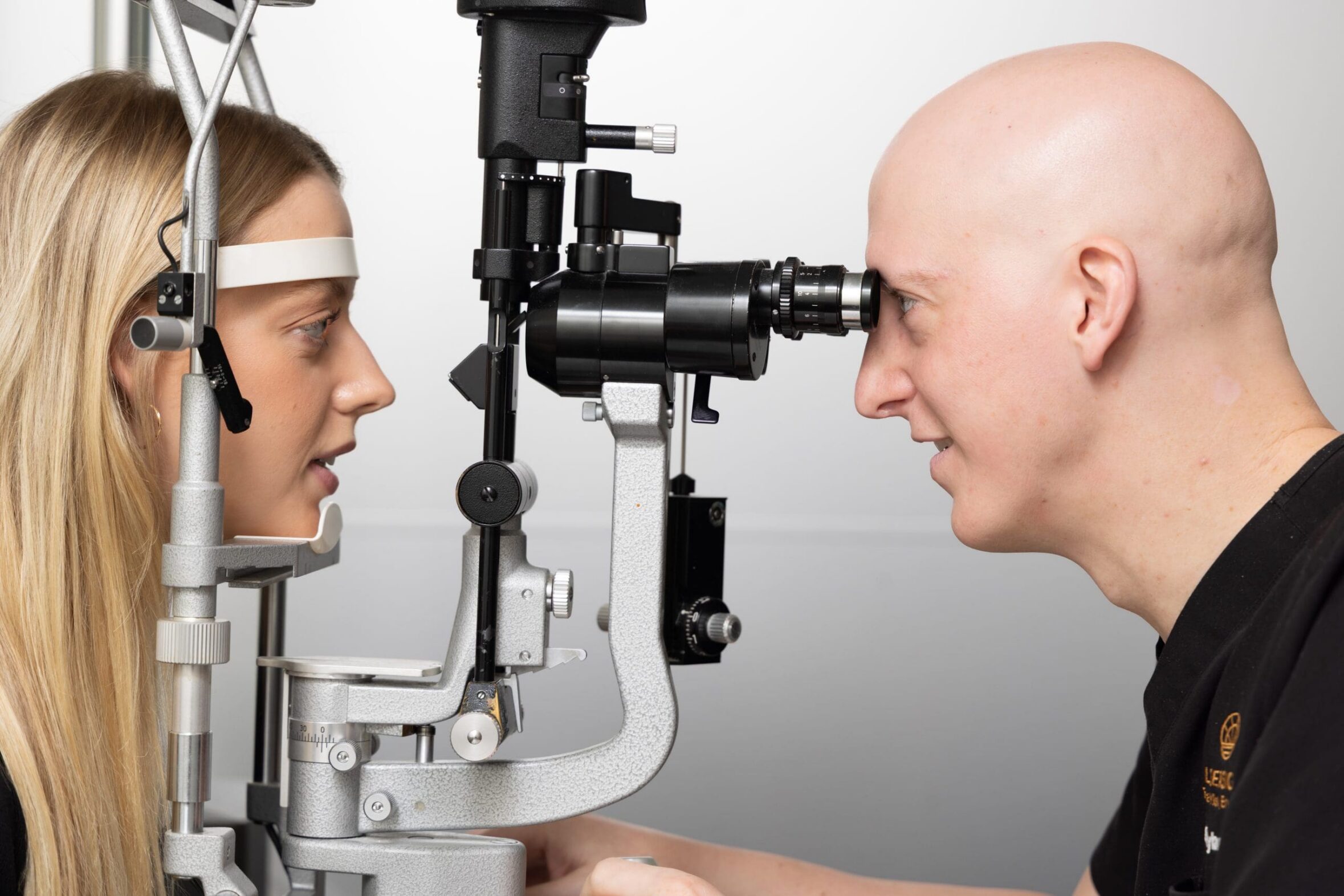
- Detailed clinical examination
- Dermatoscopic evaluation where appropriate
- Biopsy to confirm the type of skin cancer
- Imaging in selected cases
Accurate diagnosis allows for precise surgical planning and optimal outcomes.
Treatments
Treatment is focused on complete removal of the cancer while reconstructing the eyelid to maintain its essential function.
Surgical Excision & Reconstruction
The primary treatment is surgical removal of the lesion. This may be performed:
- With intraoperative pathology (frozen section) to ensure all cancer cells are removed at the time of surgery
- In collaboration with a Mohs surgeon, where the cancer is removed in stages and reconstruction is performed once clear margins are confirmed
Following removal, reconstruction is performed to restore:
- Eyelid structure
- Proper opening and closure of the eye
- A natural cosmetic appearance
Techniques may include local tissue flaps or grafts depending on the size and location of the lesion.
Recovery & Aftercare
Recovery depends on the size and complexity of the procedure.
Post-operative care includes:
- Monitoring of wound healing
- Follow-up appointments to ensure complete cancer clearance
- Ongoing skin surveillance to detect any new lesions early
Long-term protection from sun exposure is essential to reduce the risk of future skin cancers.