
Short-Sighted Vision (Myopia)
Short-sightedness, or myopia, is the most common refractive error. It allows clear vision at close range, but distant objects appear blurred.What Is Short-Sighted Vision (Myopia)?
Myopia occurs when light focuses in front of the retina rather than directly on it. This is usually because:
- The eyeball is slightly longer than average, or
- The cornea has too much curvature
As a result, distant objects appear out of focus while near vision remains clear.
Common symptoms include:
- Blurred distance vision
- Squinting to see clearly
- Eye strain
- Headaches
- Fatigue when driving or playing sport
Myopia often develops in childhood or adolescence and may progress over time before stabilising in early adulthood.
Symptoms
Symptoms of myopia typically include:
- Difficulty seeing road signs or distant screens
- Blurred vision when watching television
- Visual fatigue during prolonged driving
- Squinting to sharpen distance vision
- Headaches related to eye strain
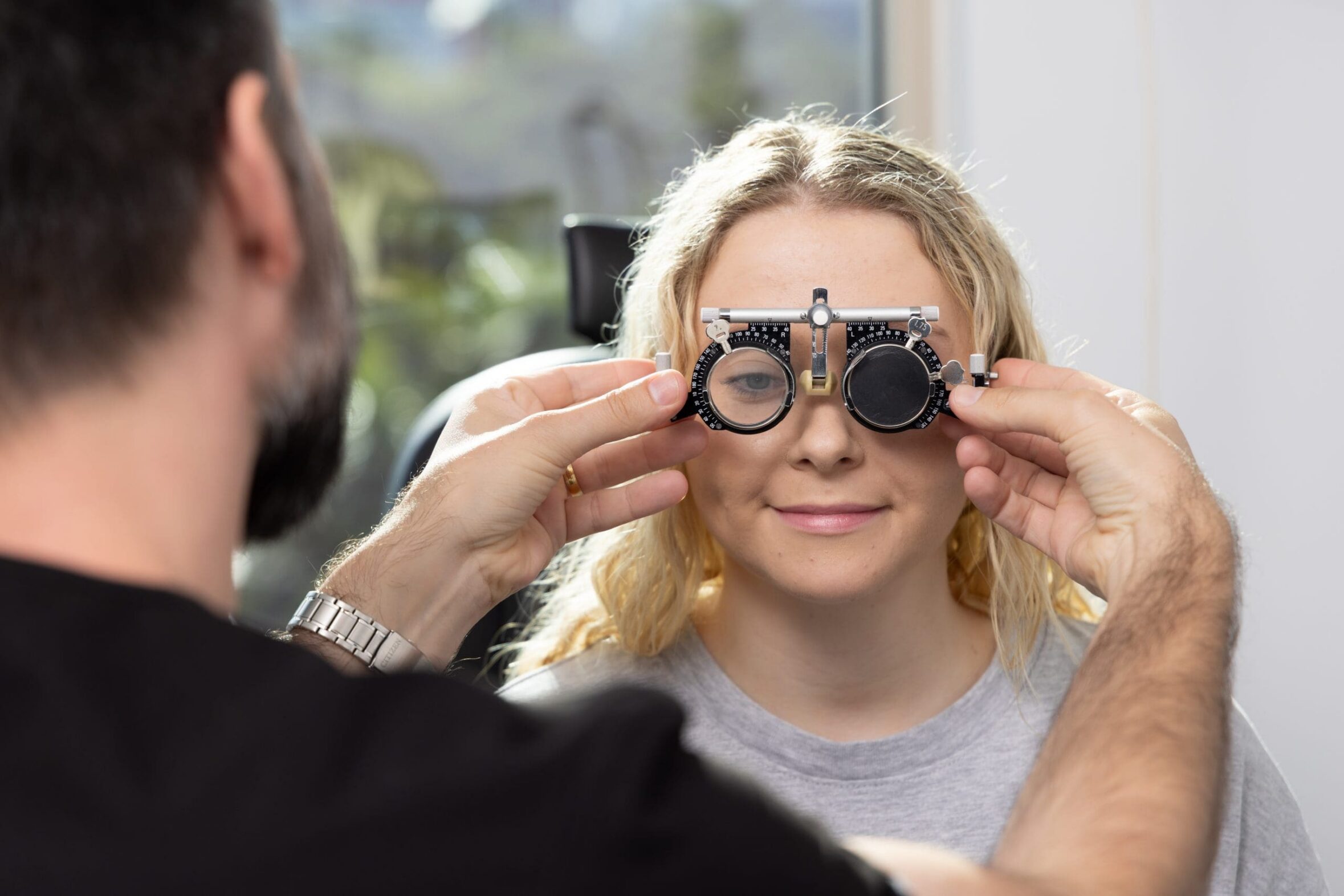
A comprehensive eye examination will confirm the degree of myopia and determine the most appropriate correction.
Next Steps
If glasses or contact lenses are becoming inconvenient – particularly for sport, swimming, travel or active lifestyles – a refractive consultation can explore long-term correction options. We assess your eye health, prescription stability and lifestyle needs to determine whether laser or lens-based surgery is appropriate.
Assessment & Diagnosis
A detailed refractive assessment evaluates:
- Prescription strength and stability
- Corneal shape and thickness
- Ocular surface health
- Internal eye structures
Advanced imaging technology allows precise treatment planning and ensures suitability for specific procedures.
Our recommendations are measured and individualised, based on safety, predictability and long-term visual quality.
Treatments
Short-sightedness can be corrected with glasses, contact lenses, laser eye surgery or intraocular lens procedures.
Surgical correction is highly successful in reducing – and often eliminating – the need for glasses or contact lenses. As with all organs, the eye naturally changes with age, and further options remain available if vision shifts later in life.
Recovery & Aftercare
Recovery depends on the procedure performed.
For laser treatments most patients return to normal routines within days. Vision improves rapidly, with continued refinement over several weeks and follow-up visits monitor healing and visual stability.
For ICL procedures surgery is performed in a day setting. Post-operative drops support healing and visual clarity is often achieved quickly. Structured follow-up ensures safe recovery and long-term visual performance