


Keratoconus
Keratoconus is a progressive condition in which the cornea thins and bulges into a cone shape, distorting vision. It often develops in teenage or early adult years. Early diagnosis and modern treatments can help slow progression, reduce visual distortion, and preserve eyesight, improving quality of life.What Is Keratoconus?
In a healthy eye, the cornea has a smooth, round shape that allows light to focus precisely on the retina. In keratoconus, the cornea becomes thinner and weaker over time, causing it to bulge forward and become irregular.
This irregular shape disrupts the eye’s focusing ability and can lead to increasing levels of astigmatism and short-sightedness.
Keratoconus typically affects both eyes, although one eye may progress more rapidly than the other. The condition often begins around puberty and may continue to progress into early adulthood.
While the exact cause is not always clear, keratoconus has been associated with:
- Genetic predisposition
- Eye rubbing
- Certain connective tissue disorders
- Chronic eye irritation or allergies
With appropriate monitoring and treatment, many patients maintain functional vision for many years.
Symptoms
Symptoms often develop gradually and may include:
- Blurred or distorted vision
- Increasing astigmatism
- Sensitivity to light and glare
- Frequent changes in glasses prescription
- Difficulty seeing clearly at night
- Halos around lights
As the condition progresses, glasses may become less effective at correcting vision.
Next Steps
If keratoconus is suspected, a comprehensive corneal assessment is recommended. Early diagnosis is important, as treatments are available to slow or halt progression and help maintain visual quality. Management focuses on both stabilising the cornea and improving visual clarity.
Assessment & Diagnosis
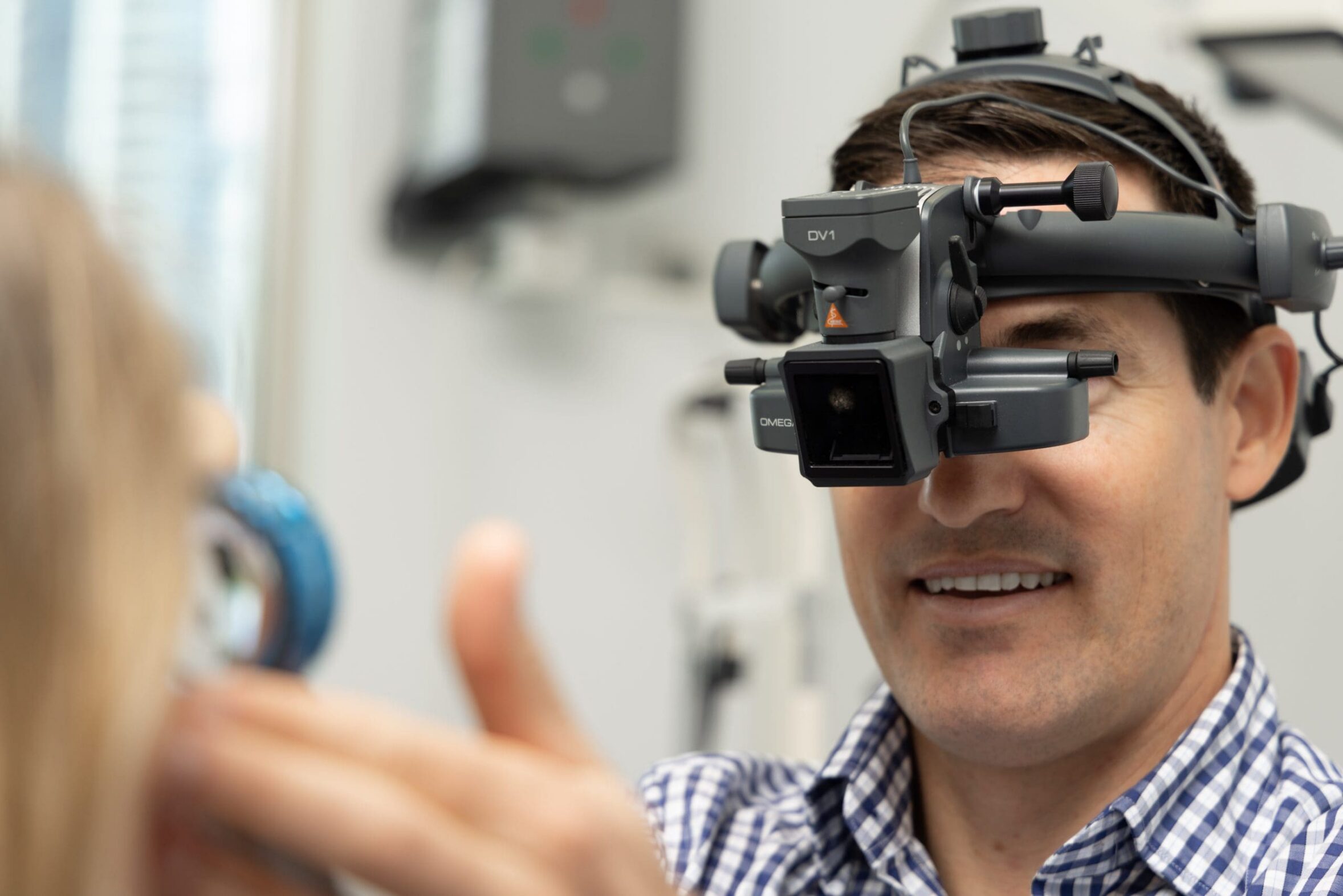
Diagnosis typically involves detailed imaging of the cornea, including:
- Corneal topography to map the corneal surface
- Corneal thickness measurements
- Assessment of refractive error and vision quality
- Examination of the overall health of the eye
These tests allow early detection of corneal changes and help guide appropriate treatment planning.
Treatments
Keratoconus treatment depends on severity and may include vision correction or procedures to stabilise the cornea.
- Corneal Collagen Crosslinking
Strengthens the cornea and slows progression using ultraviolet light and vitamin B2 (riboflavin).- Epithelium-on: quicker recovery, less discomfort
- Epithelium-off: longer recovery, often more effective
- Kerarings
Small corneal inserts reshape and flatten steep areas, improving vision and reducing reliance on glasses or contacts. - Corneal Graft
Partial or full-thickness transplants replace damaged tissue, improving vision when other treatments fail.
Recovery & Aftercare
Recovery varies depending on the treatment performed.
For crosslinking procedures:
- Mild discomfort may occur for several days
- Vision gradually stabilises over the following weeks
- Regular follow-up appointments monitor corneal stability
For kerarings or corneal graft procedures:
- Recovery may take longer
- Ongoing monitoring ensures appropriate healing and visual outcomes
With early intervention and structured care, the progression of keratoconus can often be successfully controlled.