
Long-Sighted Vision (Hyperopia)
Long-sightedness, or hyperopia, is a common refractive error affecting approximately one in four people. It makes focusing on close objects difficult and, in some cases, can also affect distance vision.What Is Long-Sighted Vision (Hyperopia)?
Hyperopia occurs when light entering the eye does not focus precisely on the retina. This is typically due to:
- The eyeball being slightly shorter than average, or
- The cornea having too little curvature
As a result, near objects may appear blurred, and sustained close work can become tiring.
While often manageable with glasses or contact lenses, hyperopia can contribute to visual strain, fatigue and reduced visual comfort – particularly during reading or prolonged screen use.
Hyperopia can be present from childhood or develop gradually. In some cases, symptoms become more noticeable with age as the eye’s natural focusing ability changes.
Modern corrective procedures offer highly effective, long-term solutions for suitable candidates.
Symptoms
Symptoms vary depending on the degree of hyperopia but may include:
- Difficulty focusing on near tasks
- Eye strain
- Headaches
- Reduced concentration during reading or computer work
- Blurred vision when reading
- Visual discomfort after prolonged close work
- Frequent headaches
- Squinting to maintain focus
- Eye fatigue
If these symptoms are affecting daily comfort or performance, a refractive assessment can determine the most appropriate correction.
Next Steps
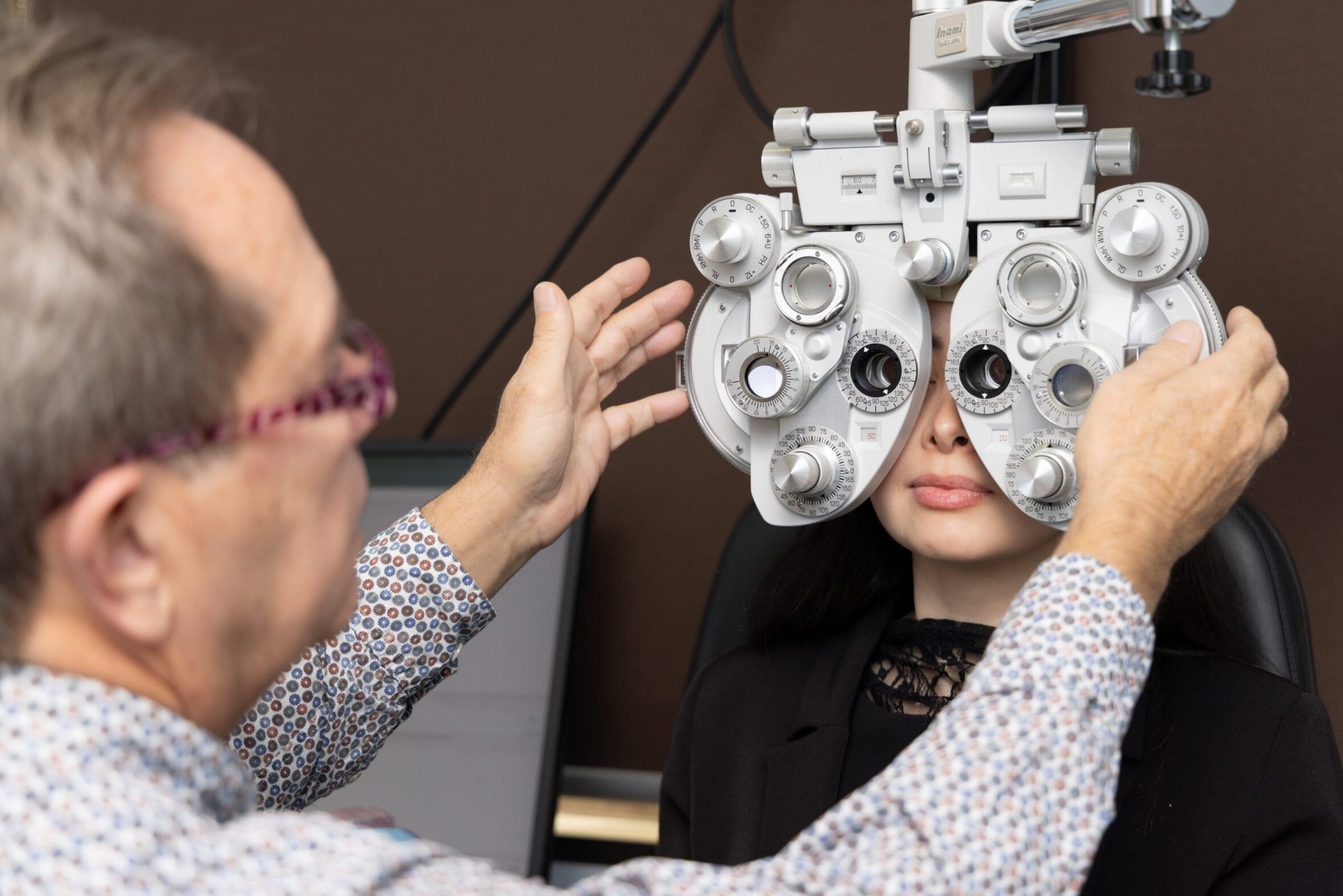
The first step is a comprehensive eye examination to confirm the diagnosis and assess the degree of hyperopia.
From there, we discuss your visual needs, lifestyle and long-term goals. Some patients prefer glasses or contact lenses. Others seek a surgical solution to reduce or eliminate dependence on corrective eyewear.
Assessment & Diagnosis
A detailed refractive assessment measures how light focuses within the eye and evaluates:
- Prescription strength
- Corneal shape and thickness
- Eye health and lens clarity
- Suitability for laser or lens-based surgery
Advanced diagnostic imaging ensures any recommendation is precise, safe and tailored to your eyes.
Treatments
Long-sightedness can be corrected with glasses, contact lenses or surgical procedures. The most appropriate treatment depends on your prescription, corneal measurements, age and lifestyle preferences.
Modern surgical techniques are highly effective in reducing – and often eliminating – the need for glasses or contact lenses. While the eye continues to change naturally over time, additional corrective options remain available if required.
Recovery & Aftercare
Recovery varies depending on the procedure performed.
For laser treatments most patients return to normal activities within a few days. Vision stabilises progressively and follow-up visits ensure optimal healing.
For lens-based procedures surgery is performed in a day setting. Eye drops are prescribed during the recovery period and visual improvement is typically rapid.
All surgical options involve structured follow-up to ensure safe healing and long-term stability.